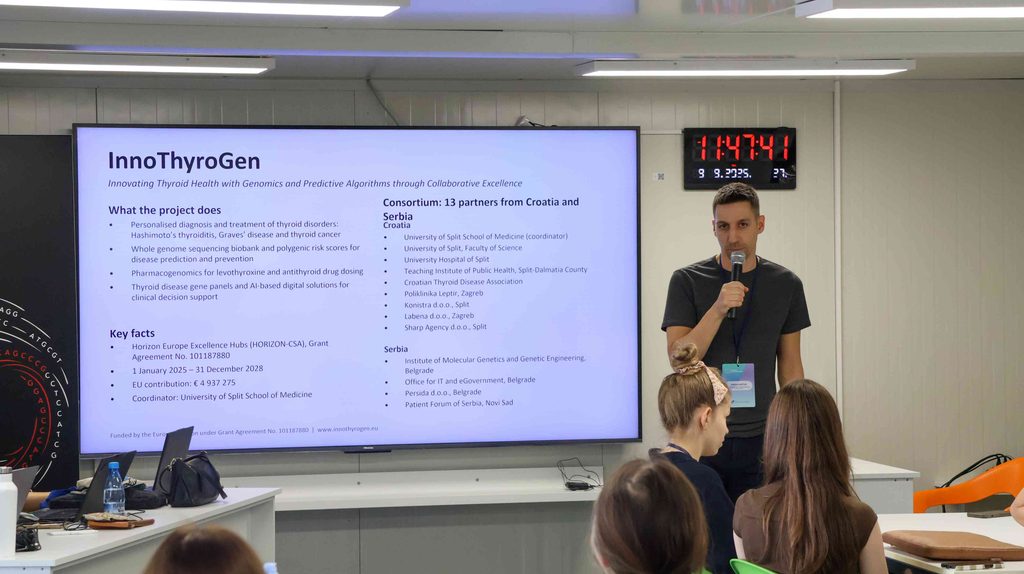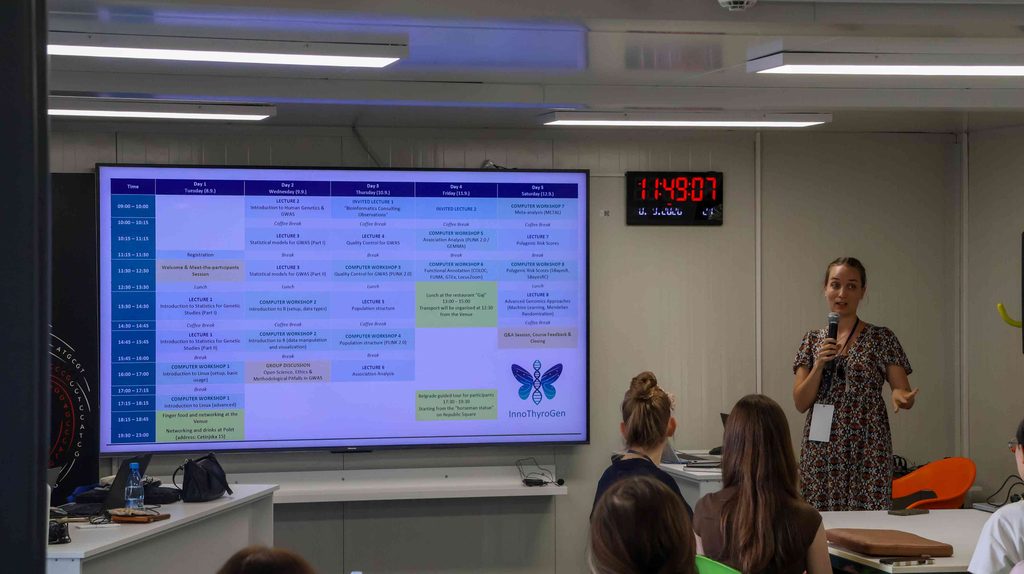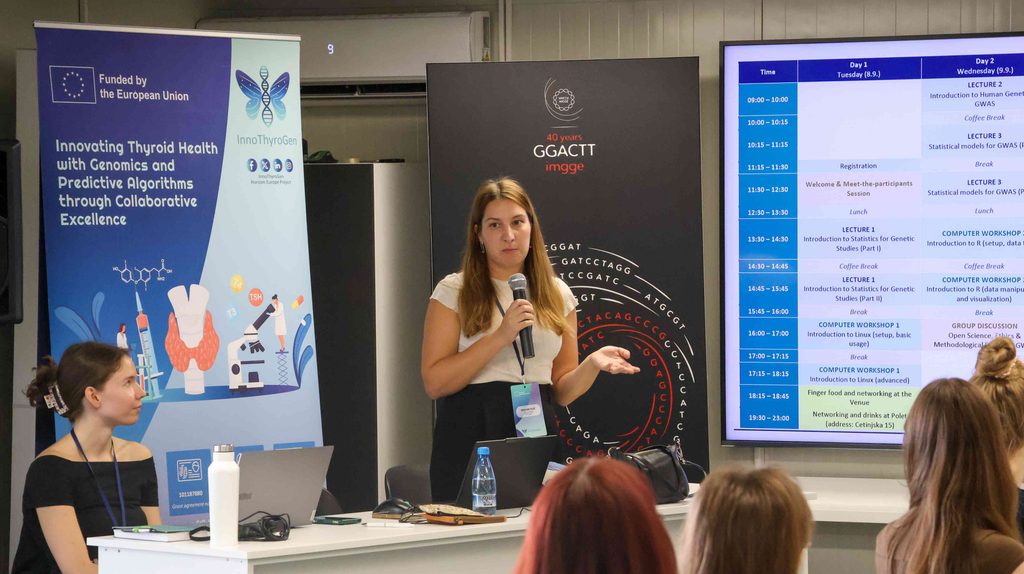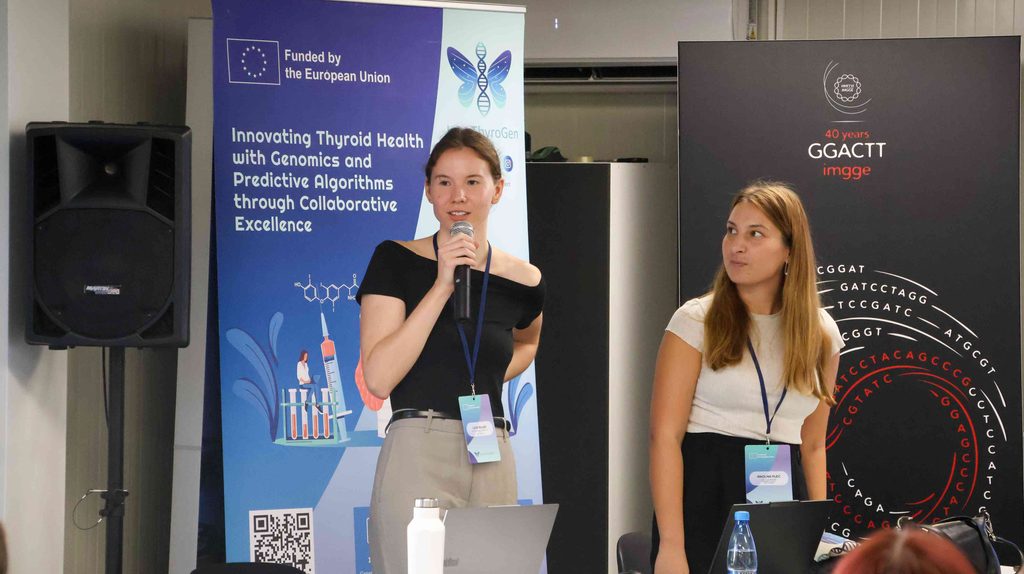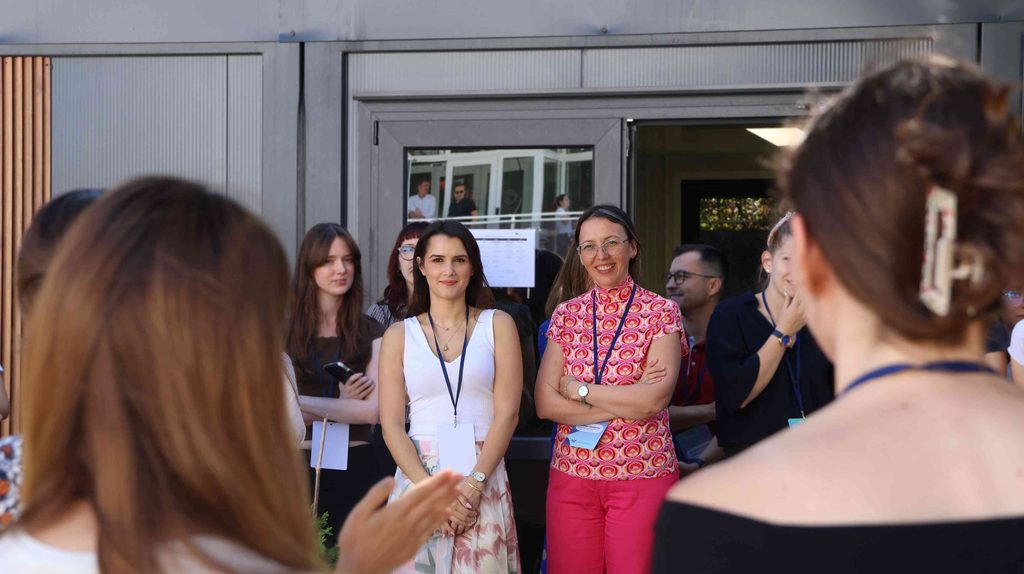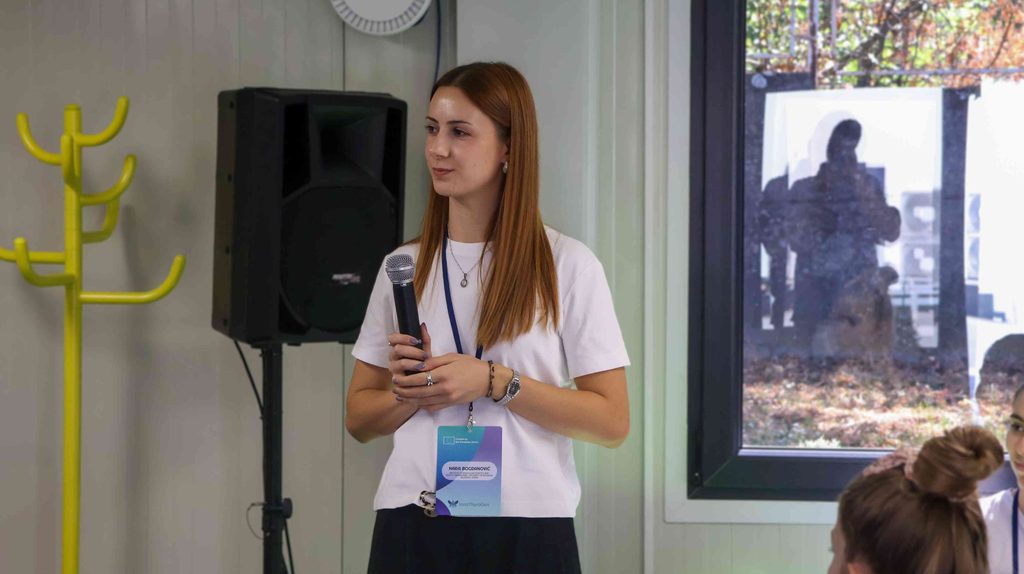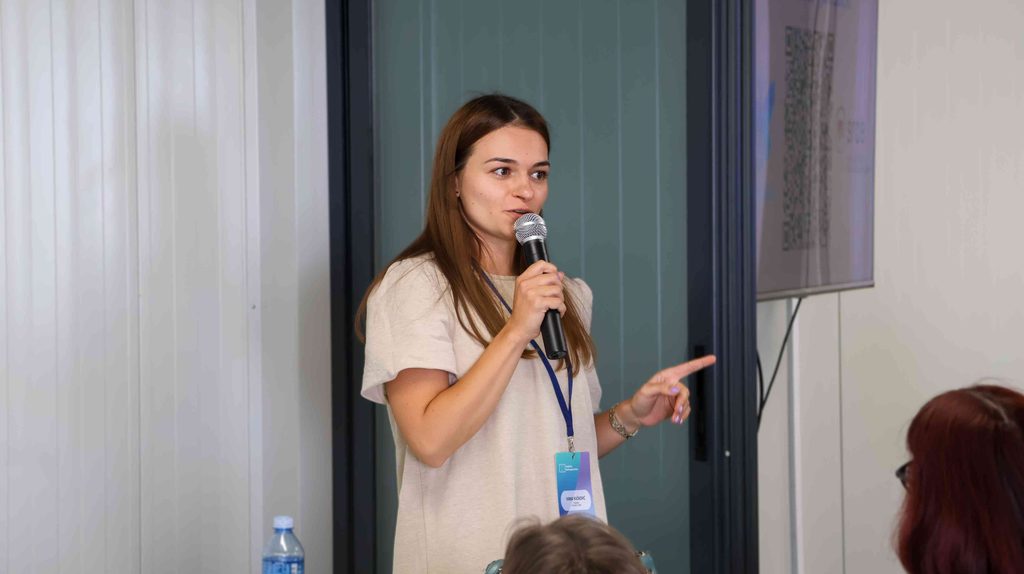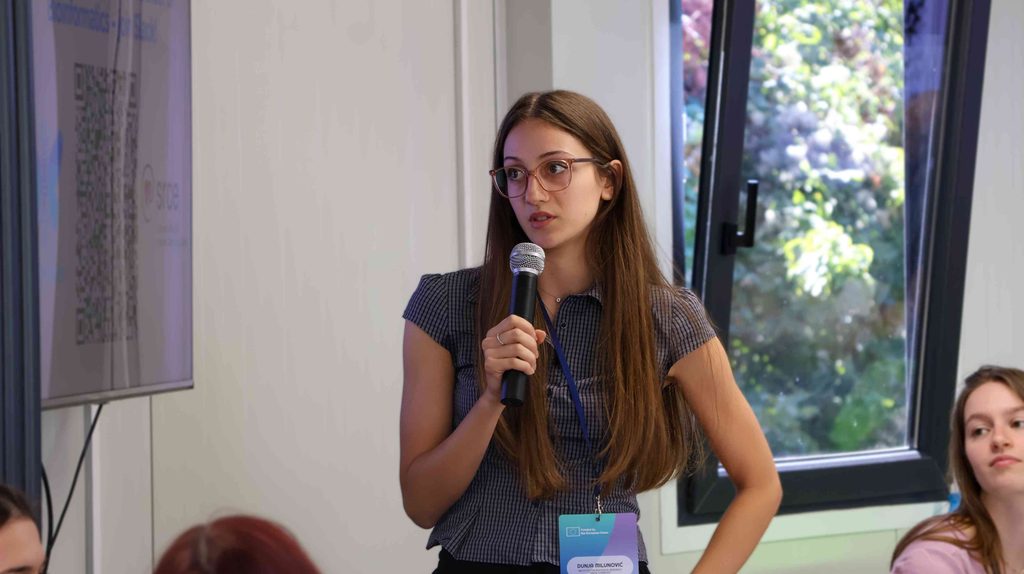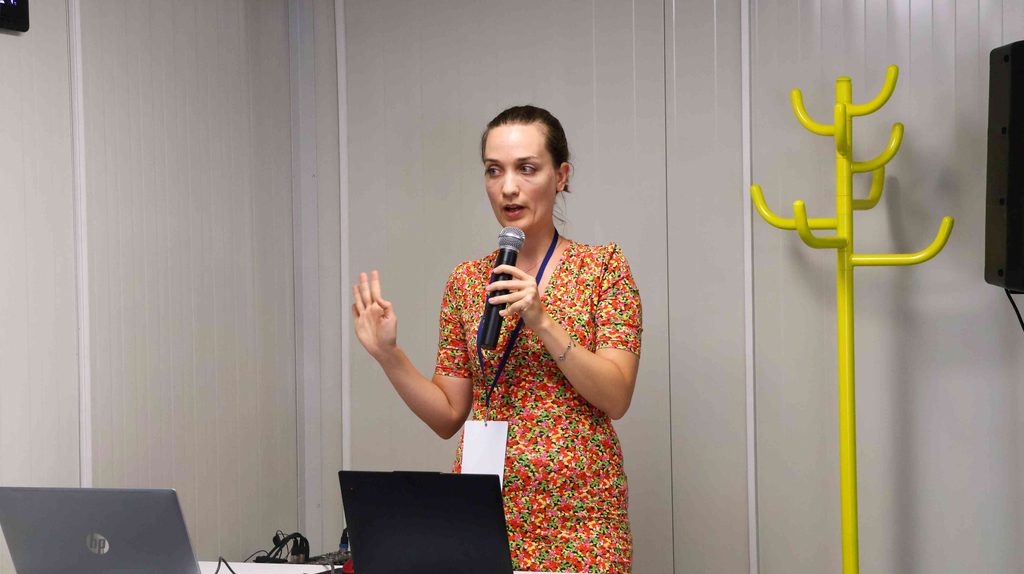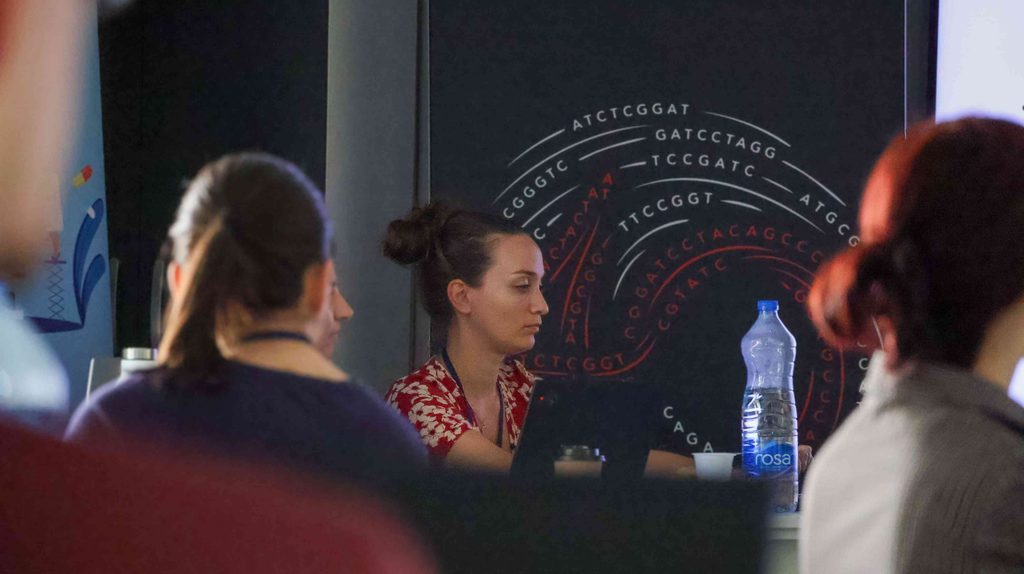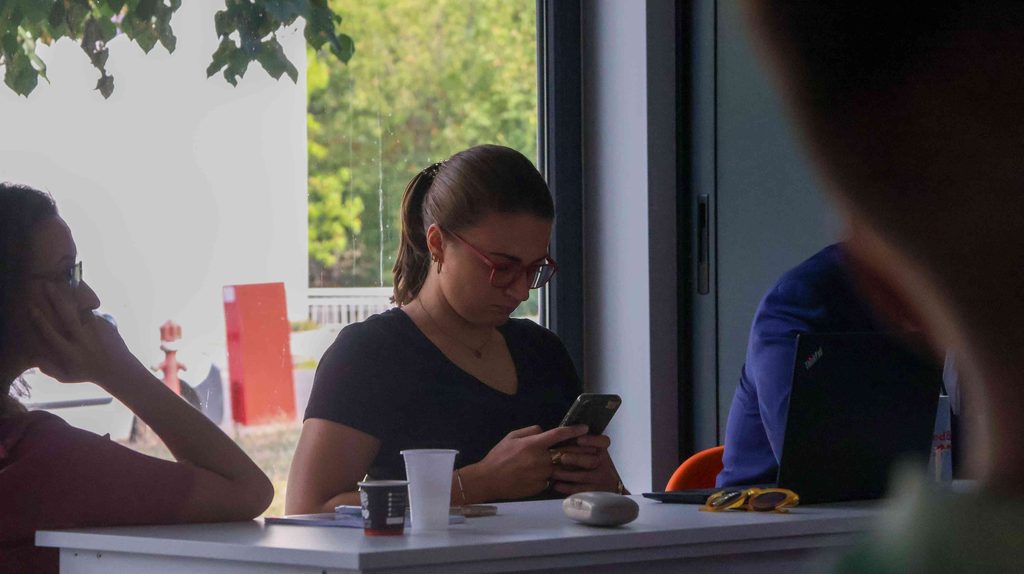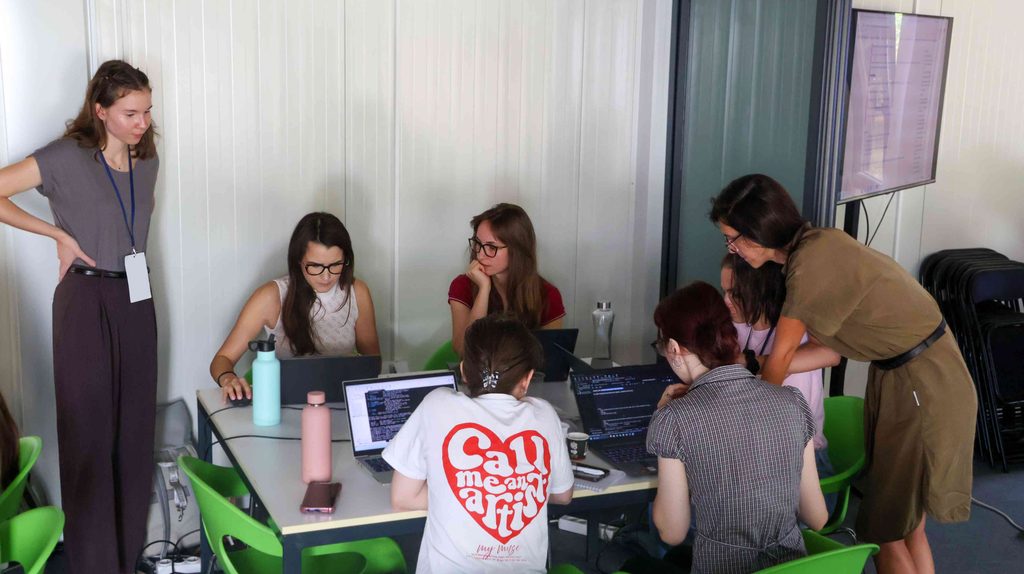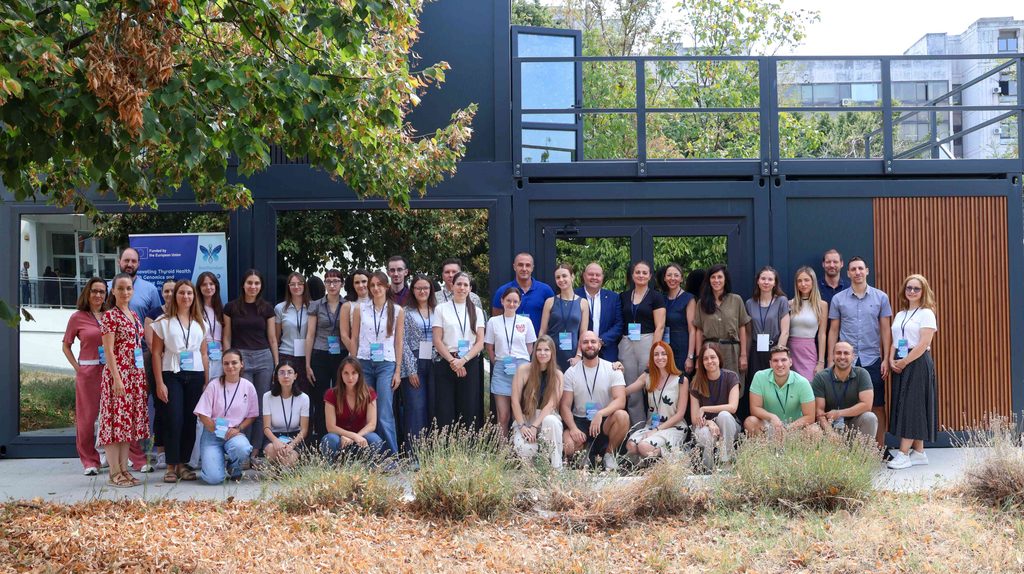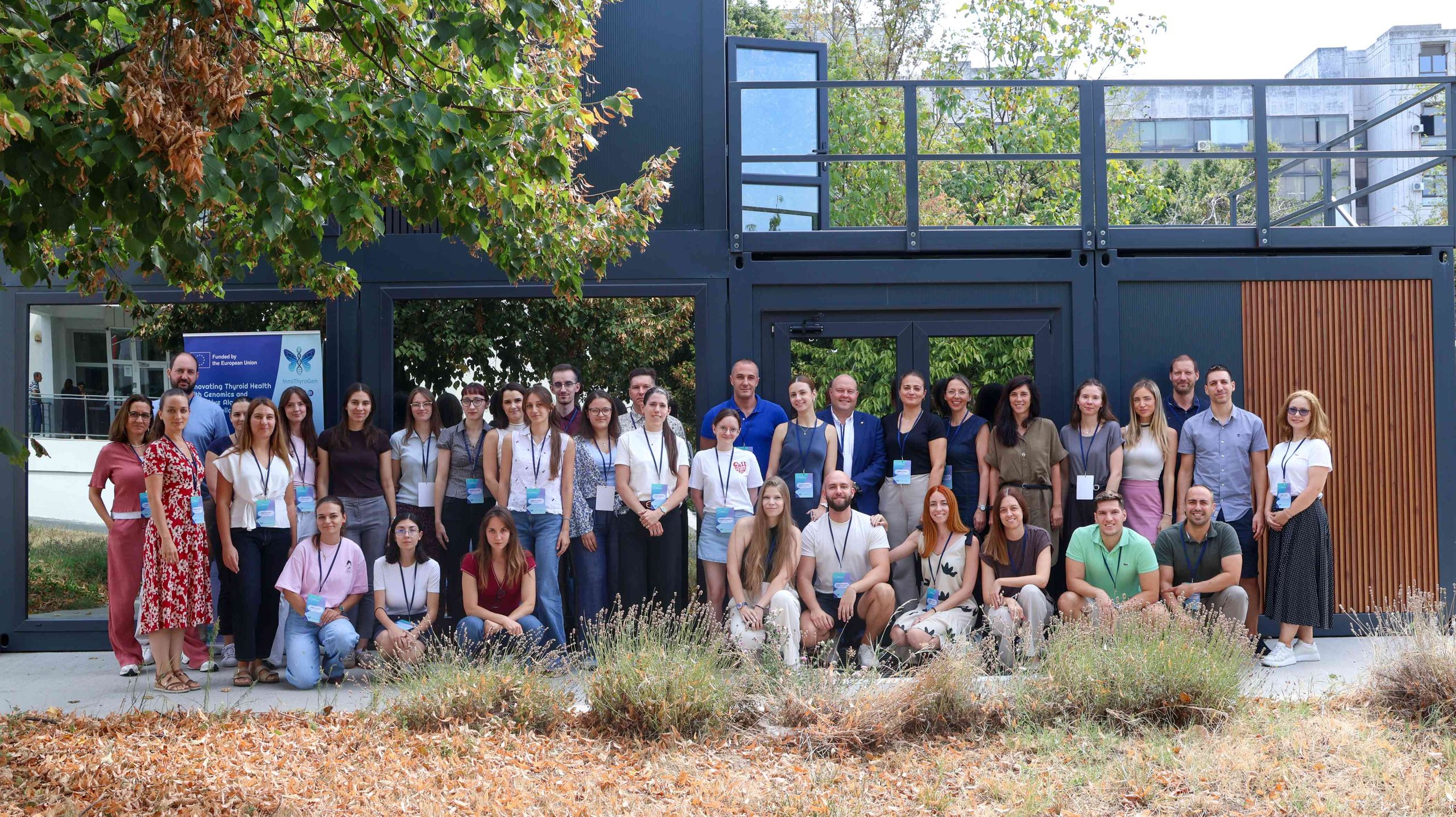
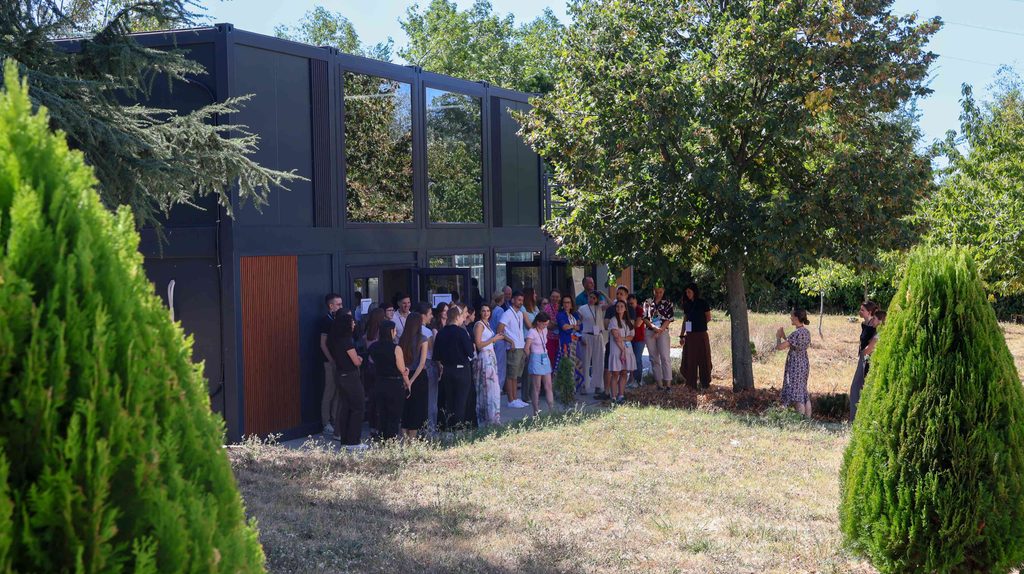
From 8 to 12 September 2026, the InnoThyroGen project held its 2nd Summer School at the Institute of Molecular Genetics and Genetic Engineering (IMGGE) in Belgrade, Serbia.
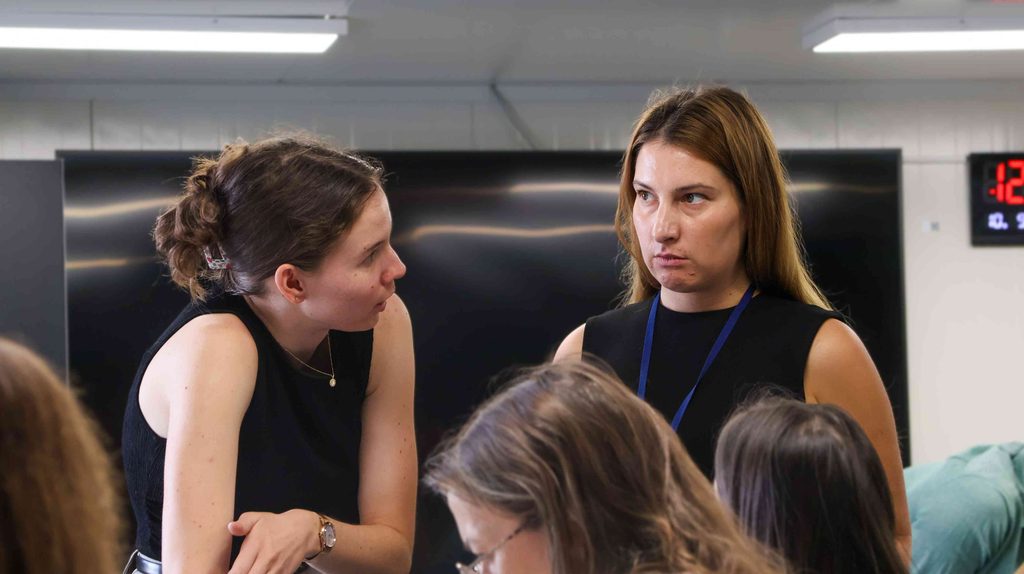
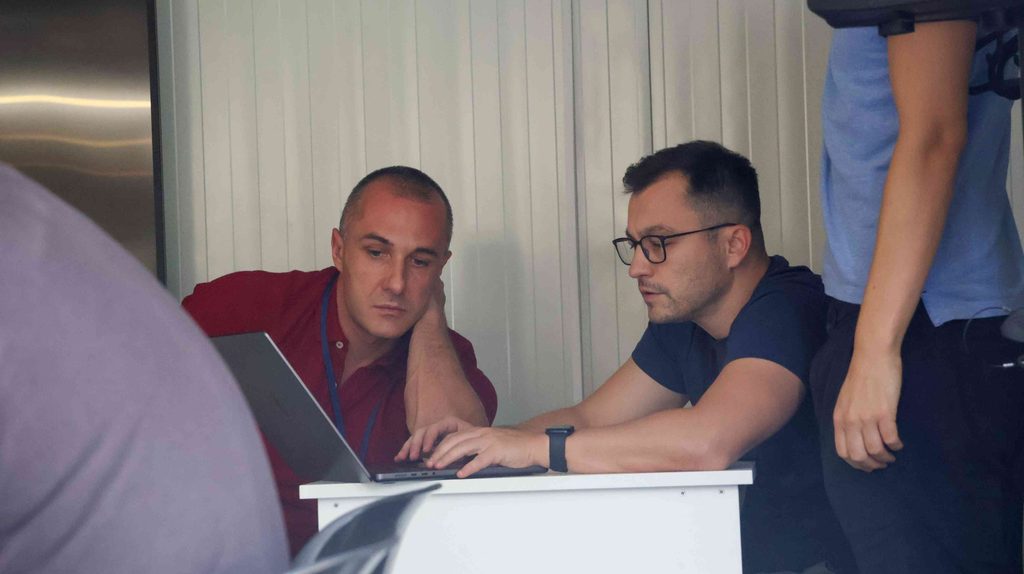
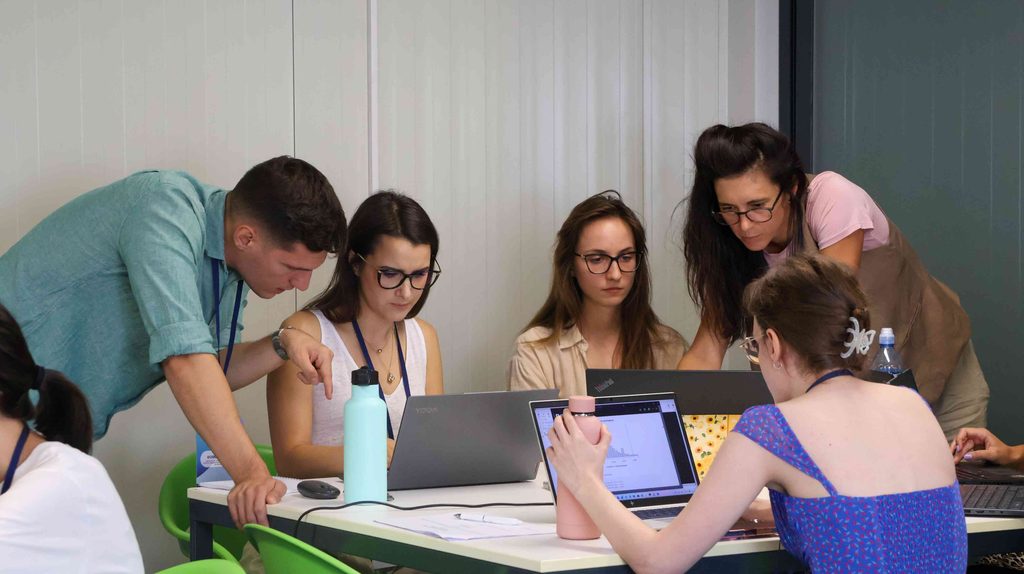
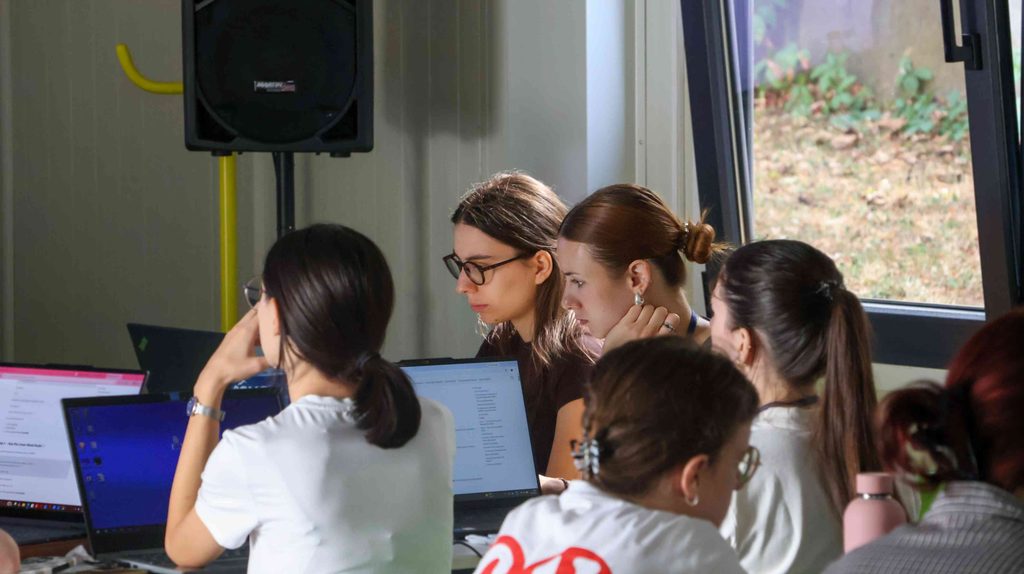
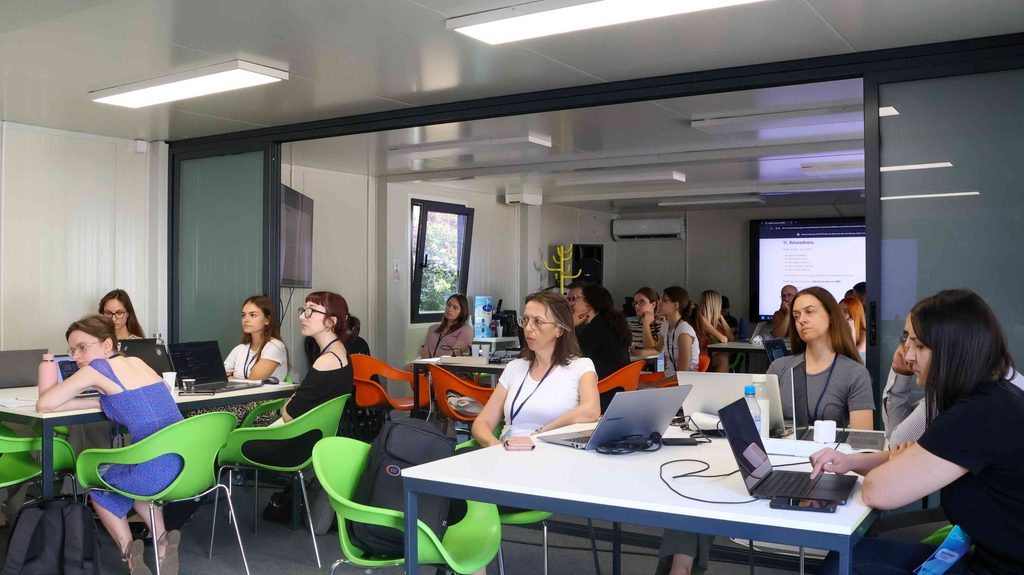
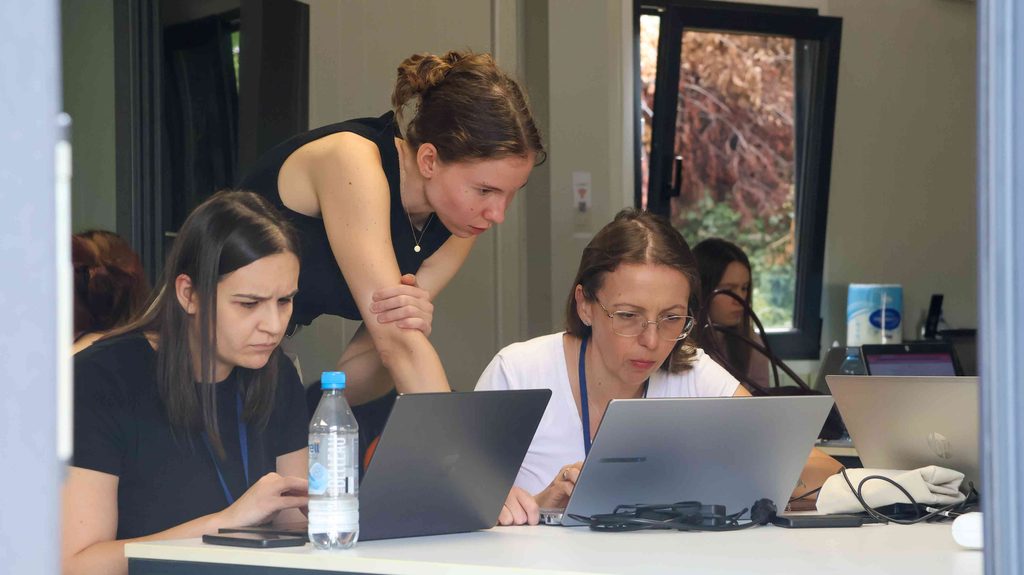
Over five days, participants explored key methods and tools used in human genetics and genome-wide association studies (GWAS). The programme combined lectures, hands-on computer workshops, invited lectures, group discussions and interactive sessions.
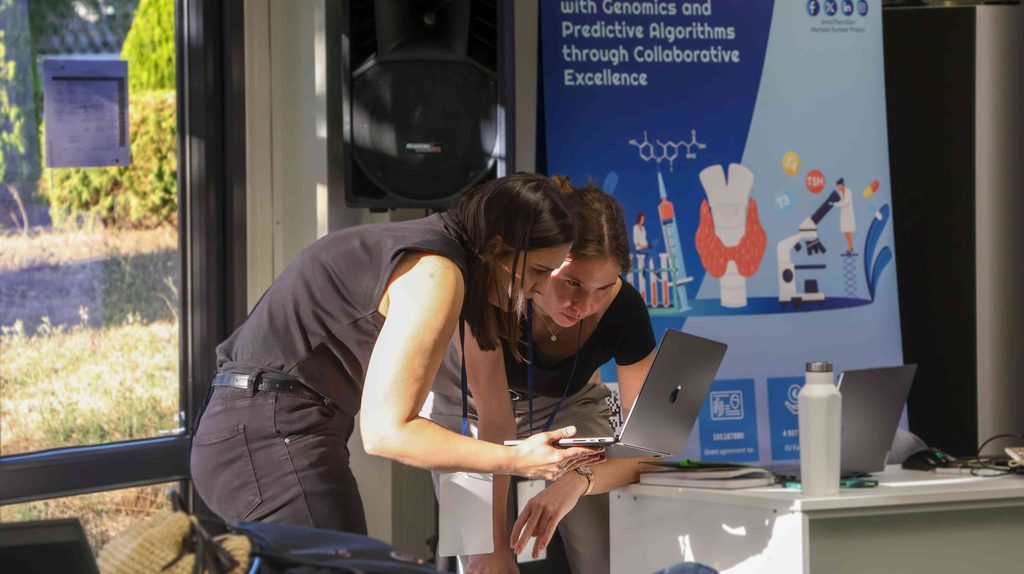
The Summer School gradually moved from fundamental statistical and computational skills to advanced genomic analyses. Participants worked with tools and methods used in modern genetic research and had many opportunities to discuss their work with lecturers and fellow participants.
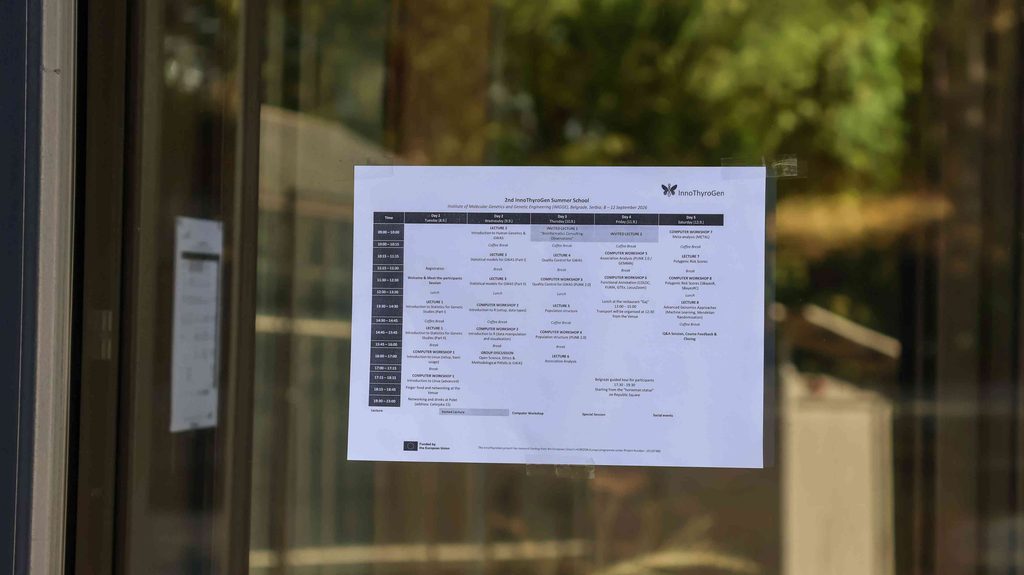
Day 1 – Building the foundations
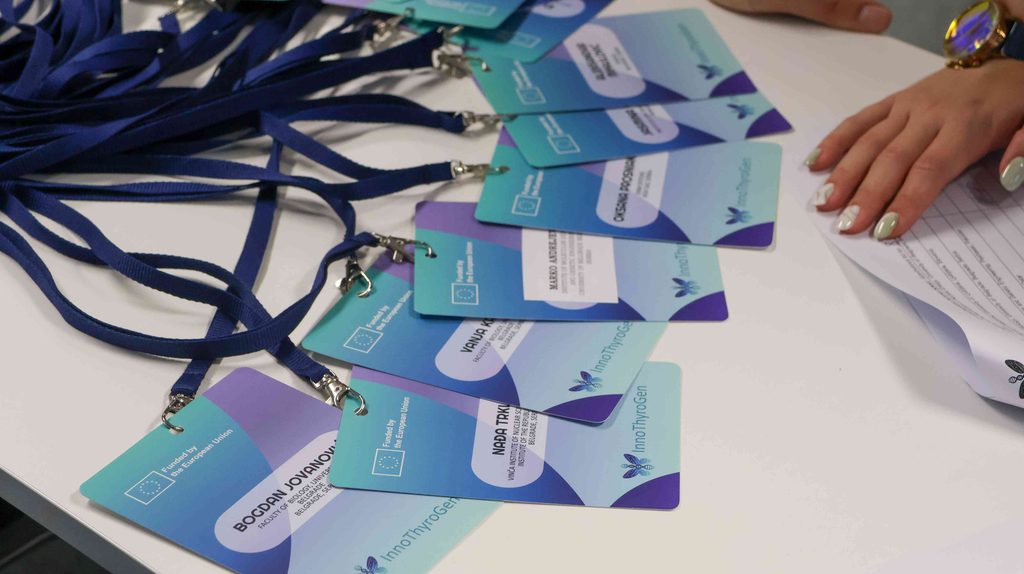
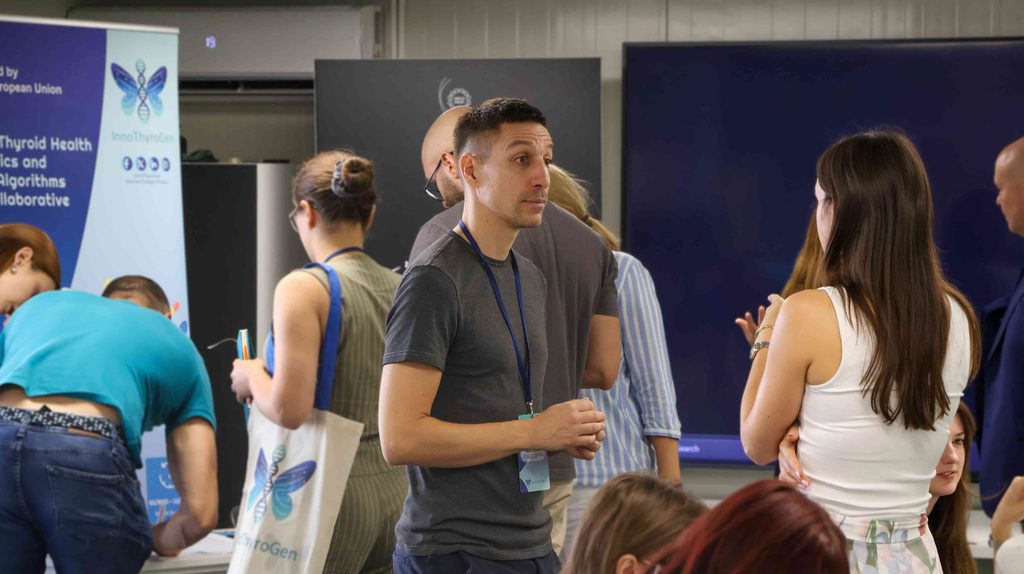
The Summer School began with a Welcome and Meet-the-participants Session, which introduced the programme and gave participants an opportunity to get to know each other.
The first lectures focused on the statistical foundations needed for genetic studies. Nikolina Pleić introduced key statistical concepts through the two-part lecture Introduction to Statistics for Genetic Studies.
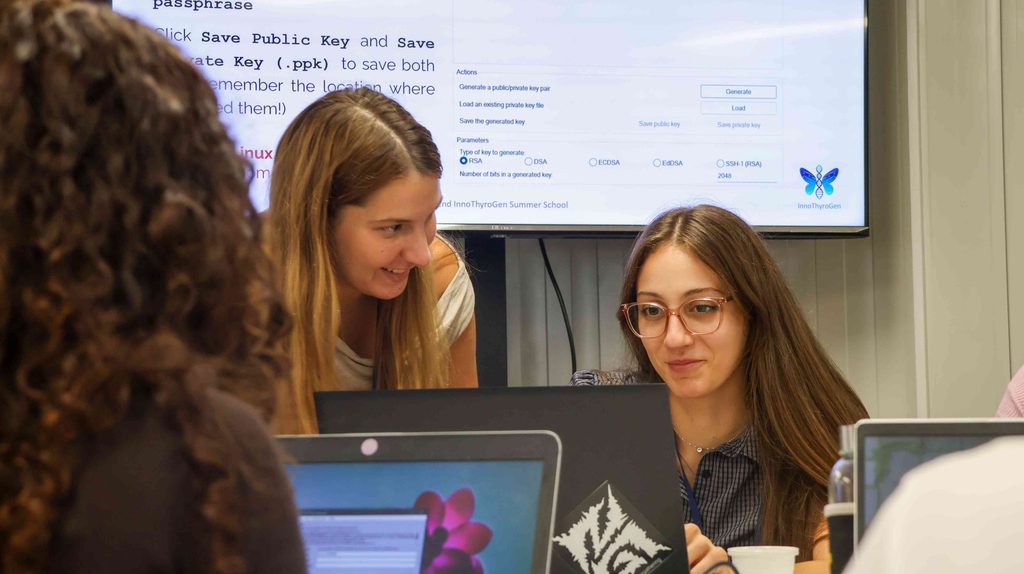
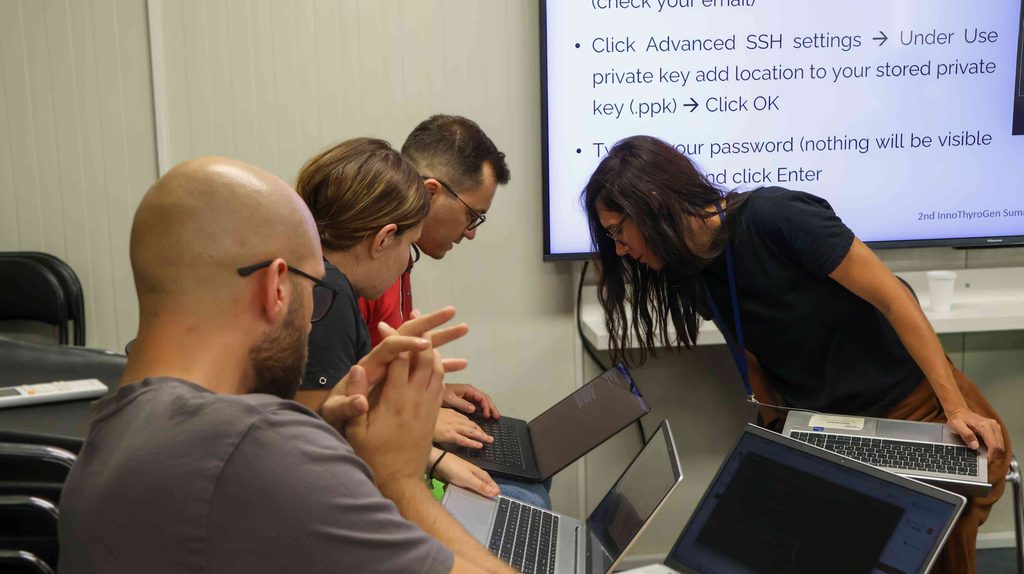
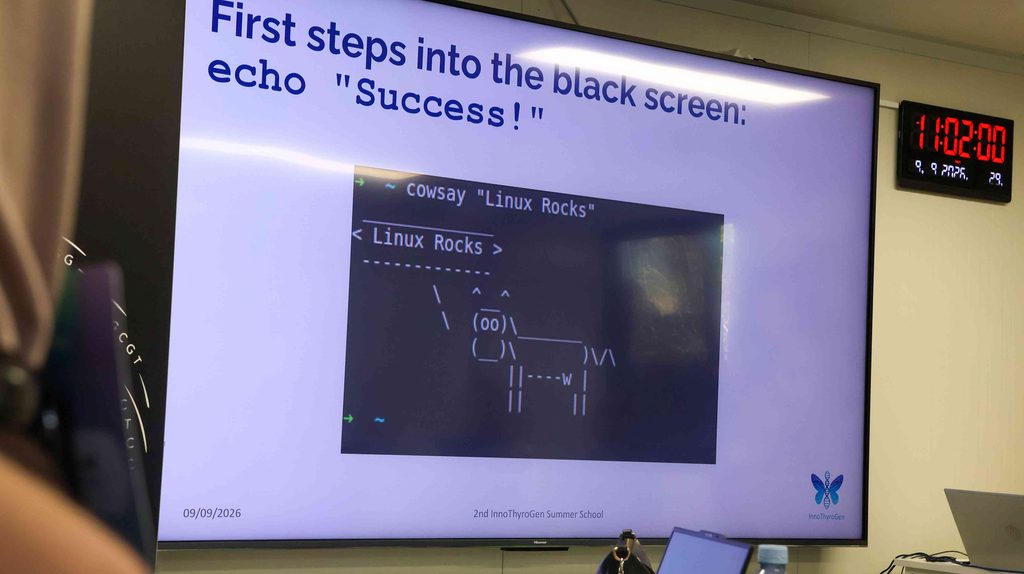
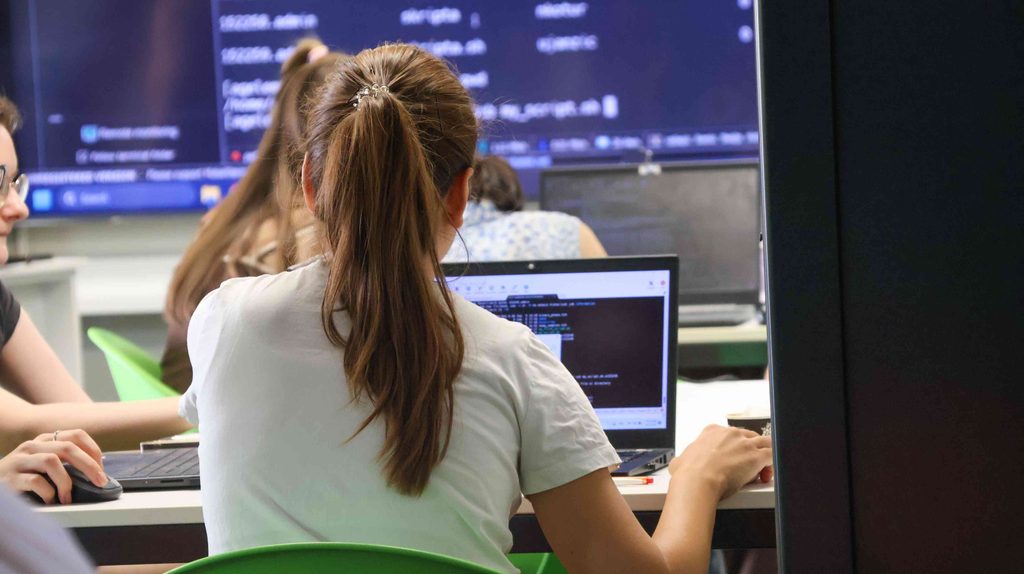
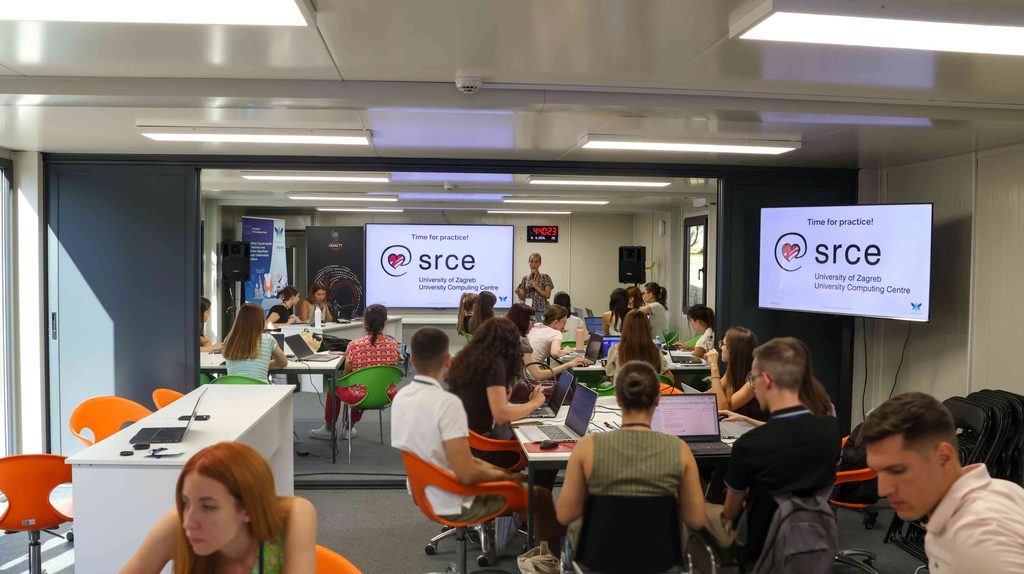
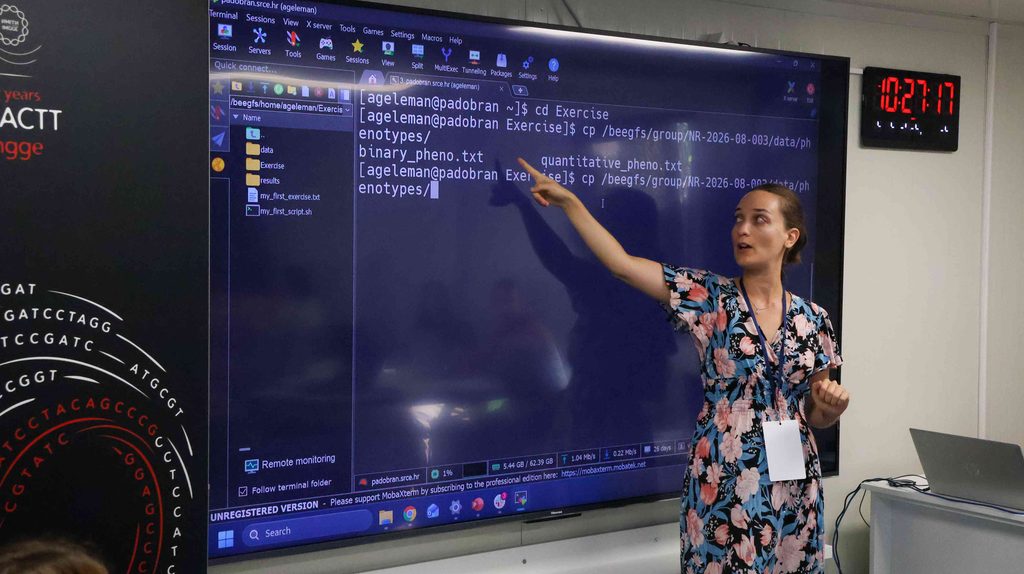
In the afternoon, participants moved from theory to practical work. Andrea Gelemanović led two computer workshops on Linux. The sessions covered both basic and more advanced Linux usage and prepared participants for the computational work planned for the following days.
Day 2 – Human genetics, GWAS and R
Day 2 introduced participants to human genetics and genome-wide association studies.
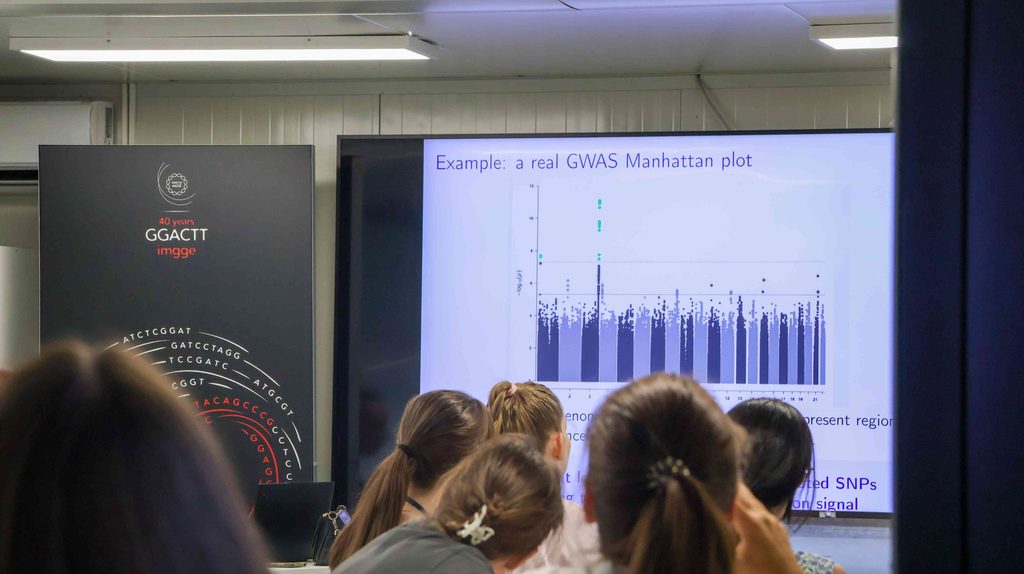
Andrea Gelemanović opened the day with Introduction to Human Genetics & GWAS. Nikolina Pleić then continued with two sessions on Statistical Models for GWAS.
Participants also strengthened their practical data analysis skills. During two computer workshops, Andrea Gelemanović introduced R, from the initial setup and data types to data manipulation and visualisation.
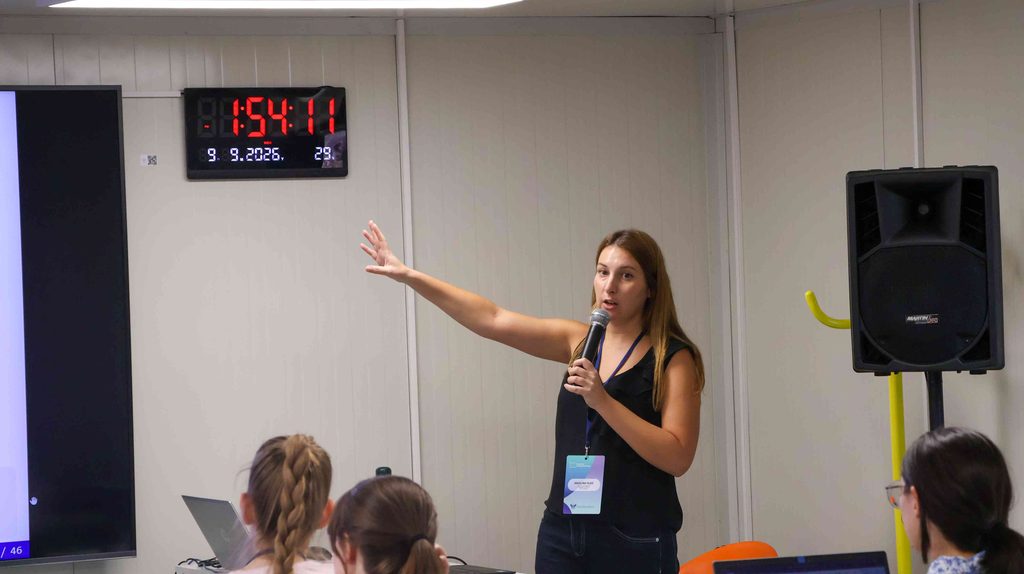
The day ended with a group discussion on Open Science, Ethics & Methodological Pitfalls in GWAS. The session encouraged participants to look beyond technical analysis and consider broader methodological and research challenges.
Day 3 – Quality control and population structure
The third day focused on important steps that researchers perform before and during GWAS analyses.
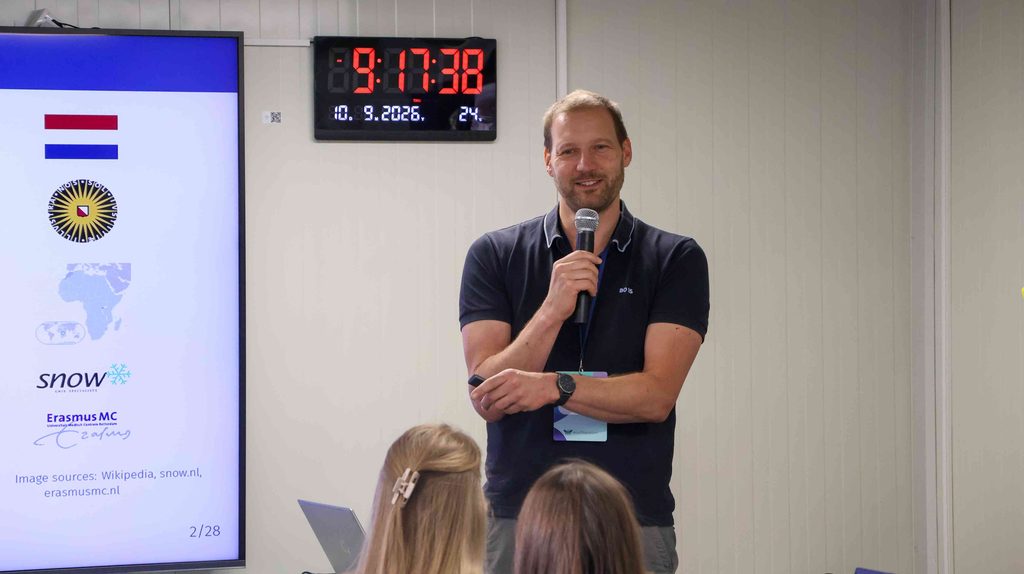
Following an invited lecture by Lennart C. Karssen (PolyOmica, The Netherlands), Andrea Gelemanović introduced participants to Quality Control for GWAS. Participants then applied these concepts during a practical workshop using PLINK 2.0.
The afternoon focused on population structure. Nikolina Pleić first introduced the topic through a lecture and then guided participants through a practical PLINK 2.0 workshop.
The day concluded with a lecture on Association Analysis, preparing participants for more advanced analyses on Day 4.
Day 4 – From association analysis to functional annotation
Day 4 continued with advanced GWAS methods and their practical application.
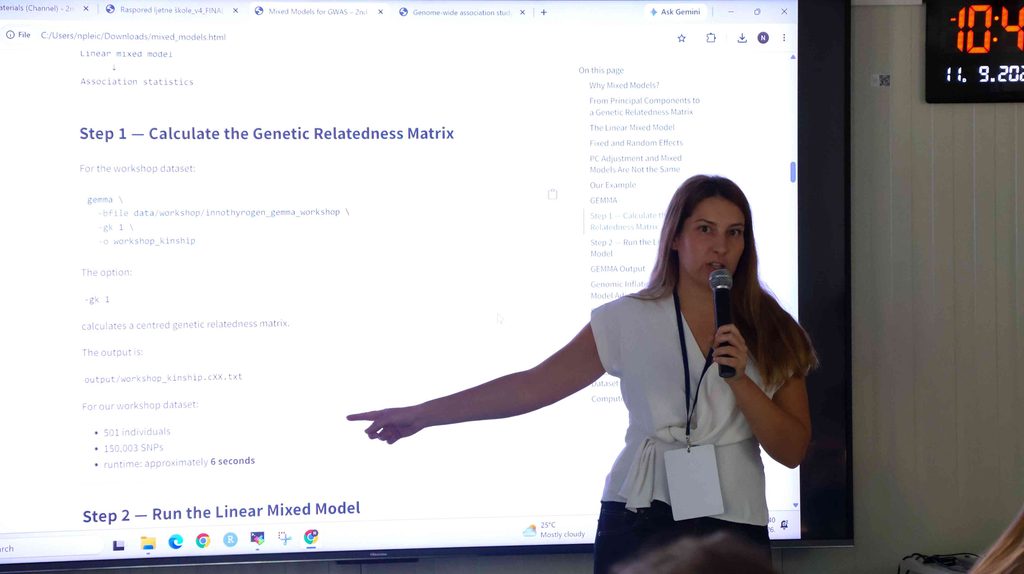
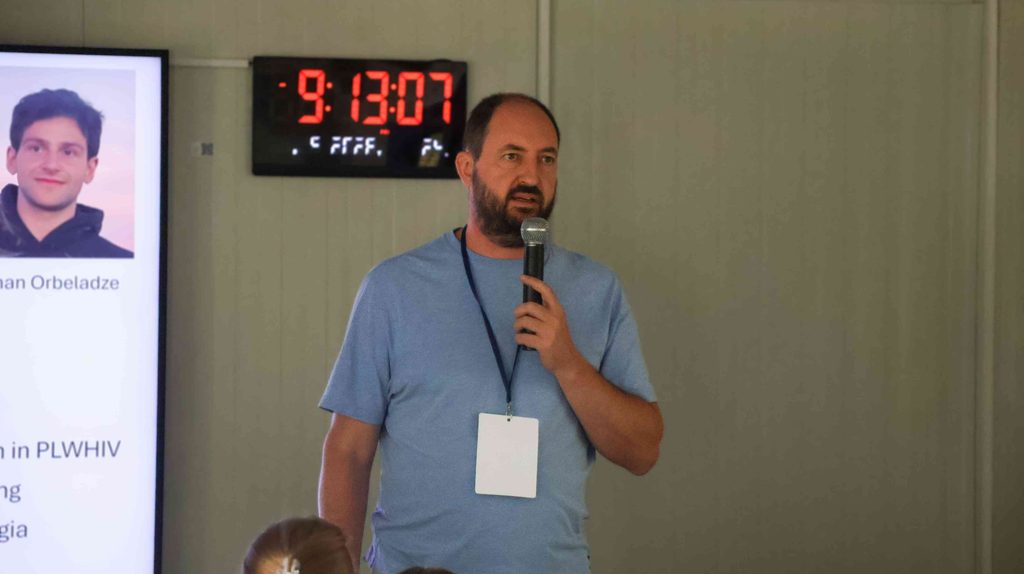
The programme began with an invited lecture by Maxim Freydin (King’s College London, United Kingdom). Participants then worked on Association Analysis using PLINK 2.0 and GEMMA under the guidance of Nikolina Pleić.
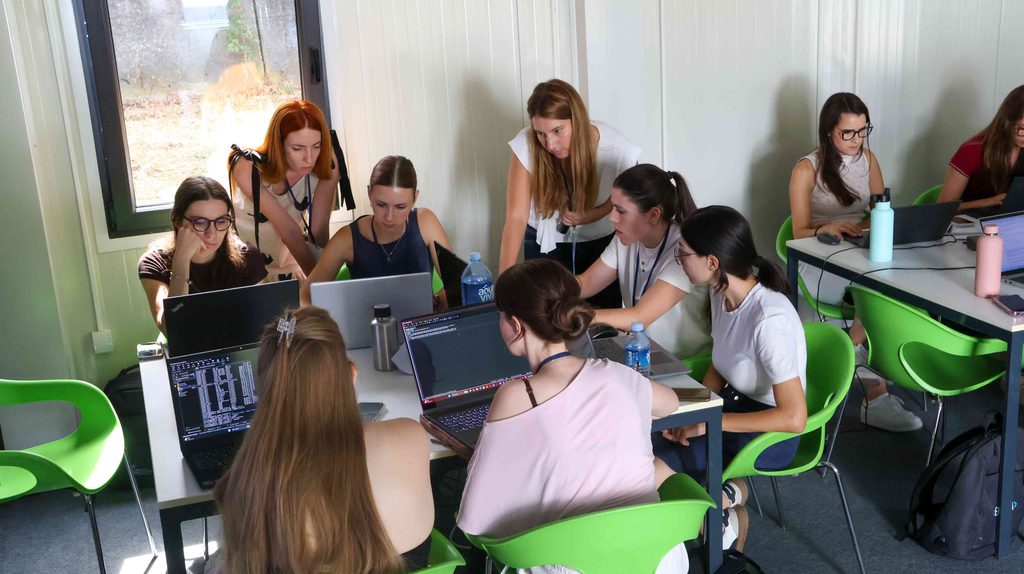
The next computer workshop focused on Functional Annotation. Participants explored several widely used tools and resources, including COLOC, FUMA, GTEx and LocusZoom.
In the afternoon, invited members took part in an InnoThyroGen R&I Lab. Meanwhile, Summer School participants had the opportunity to explore Belgrade through a guided city tour.
Day 5 – Polygenic Risk Scores and advanced genomics
The final day brought together several advanced approaches in genetic research.
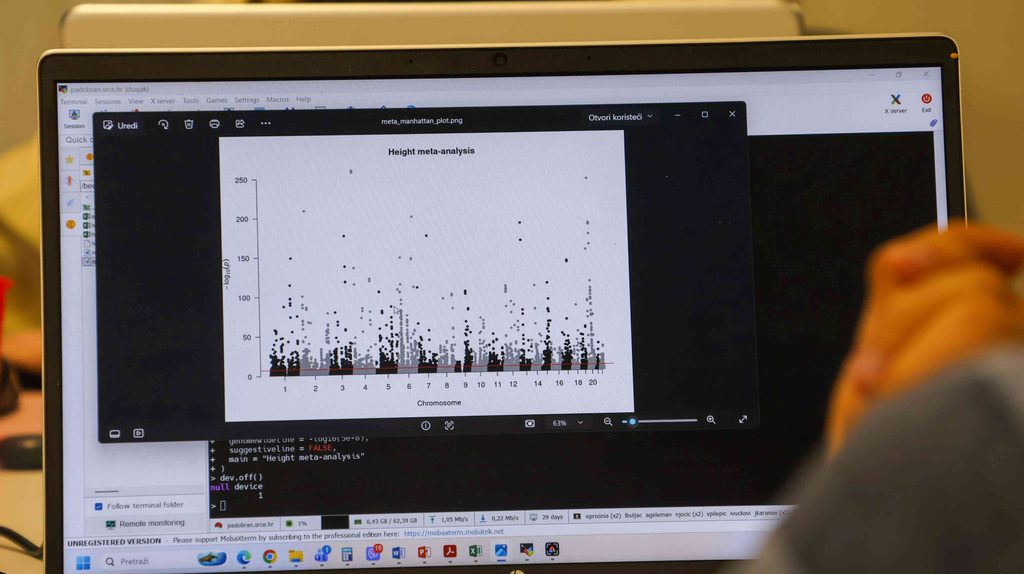
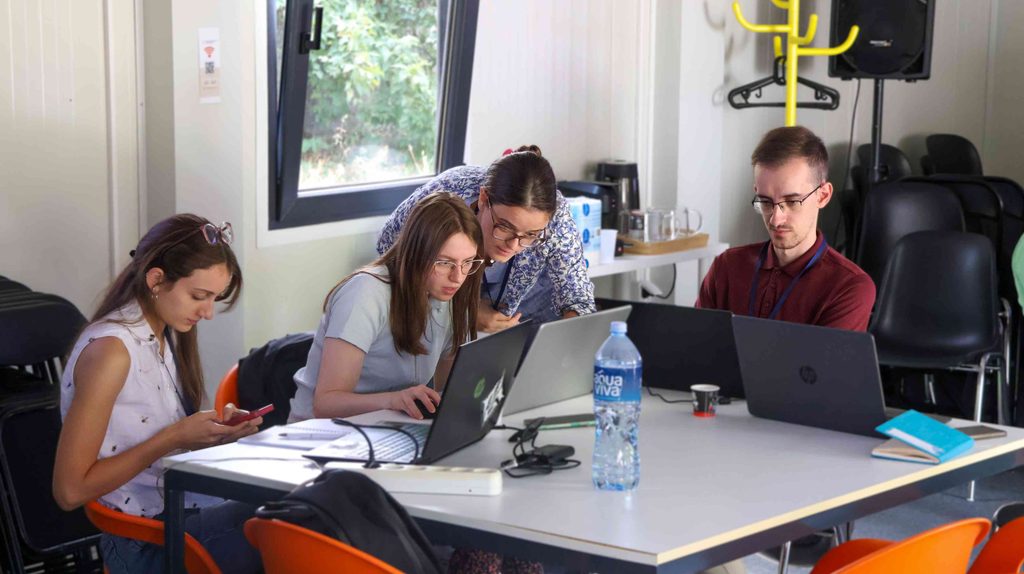
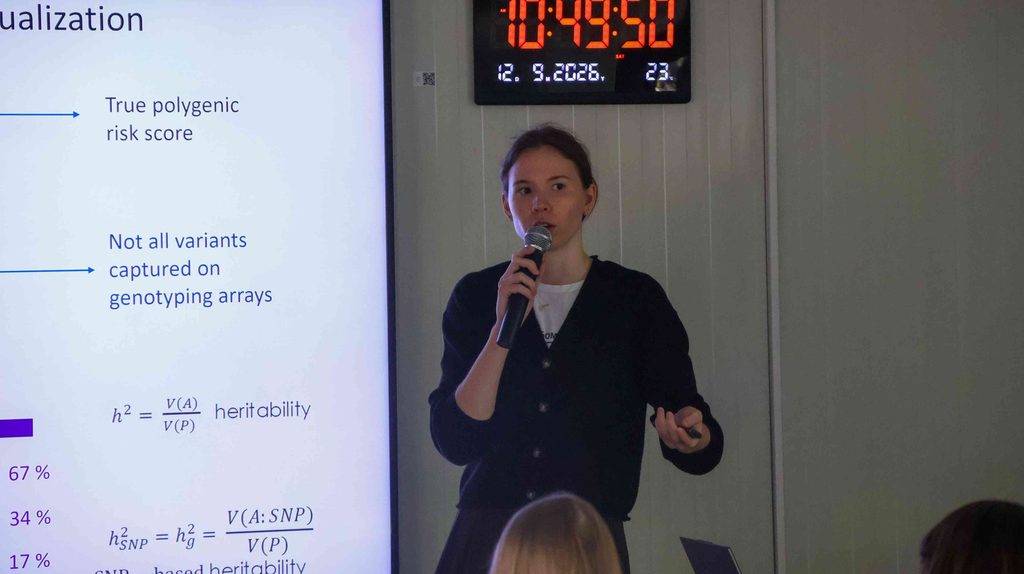
Andrea Gelemanović started the programme with a hands-on workshop on meta-analysis using METAL. Afterwards, Lucia Buljac introduced the concept of Polygenic Risk Scores (PRS).
Participants then put this knowledge into practice during a computer workshop on PRS using SBayesR and SBayesRC.
The final lecture, led by Andrea Gelemanović and Nikolina Pleić, explored Advanced Genomics Approaches, including machine learning and Mendelian randomization.
The Summer School concluded with a Q&A session, course feedback and closing, giving participants and lecturers a final opportunity to exchange ideas and reflect on the five-day programme.
Five days of learning and collaboration
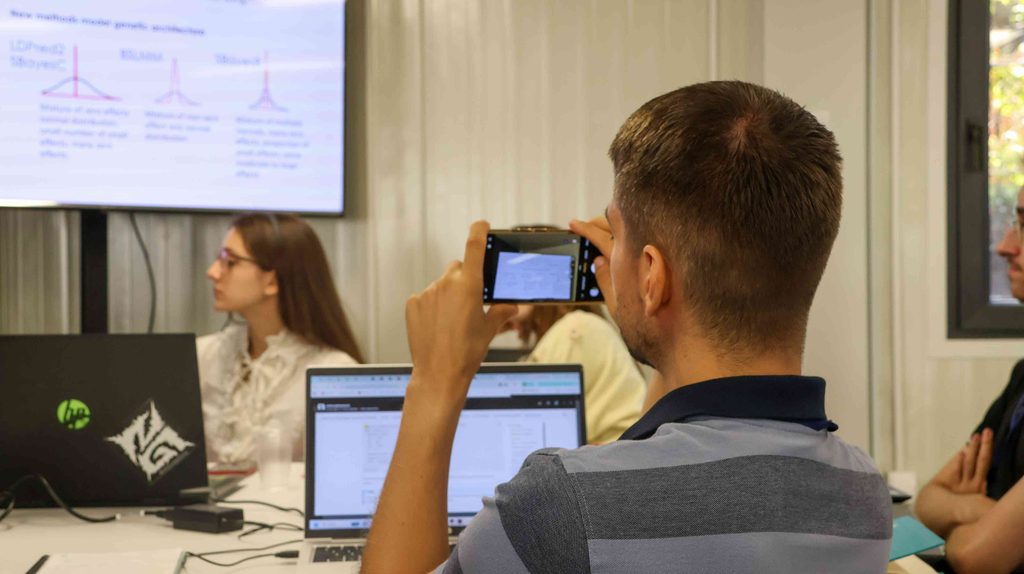
The 2nd InnoThyroGen Summer School combined theoretical knowledge with practical experience. Participants developed skills in statistics, Linux, R, GWAS, quality control, population structure, association analysis, functional annotation, meta-analysis and Polygenic Risk Scores.
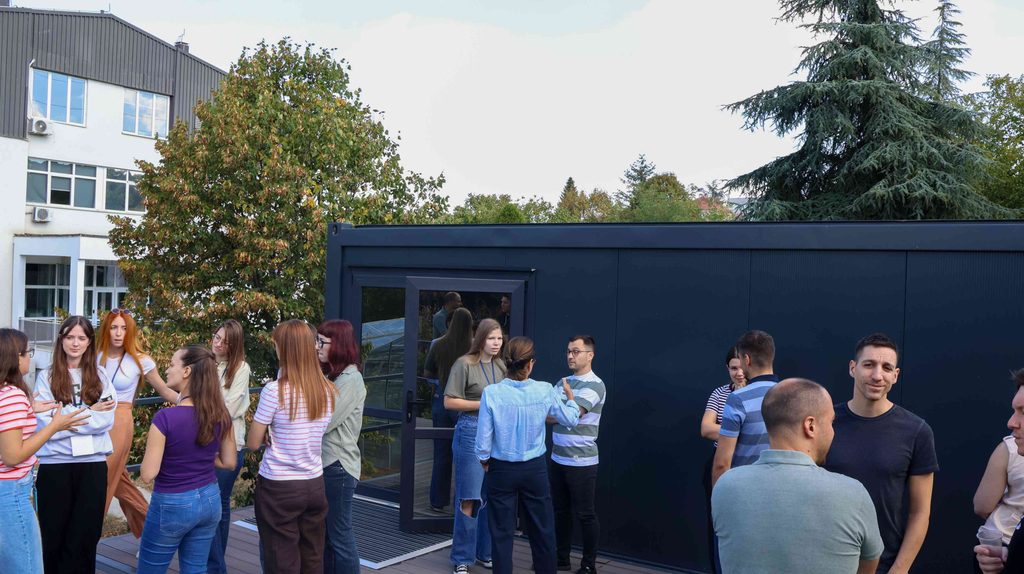
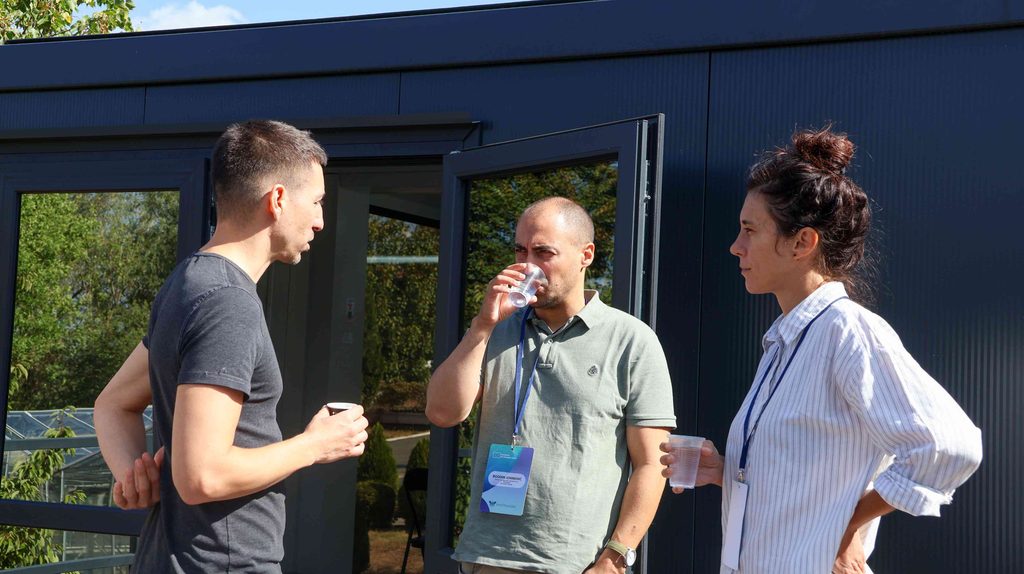
Just as importantly, the Summer School created a space for discussion, knowledge exchange and collaboration among researchers interested in genetics and genomics.
Through activities such as the Summer School, InnoThyroGen continues to strengthen research capacity and knowledge exchange in genomics and personalised medicine.
📢 Stay tuned for updates, follow our channels, and don’t miss the chance to join the next InnoThyroGen Summer School!
FOTO